

Hiking offers incredible physical and mental benefits, but for beginners, it can feel overwhelming. With the right preparation and gear, it’s an experience anyone can enjoy.
This guide will help you start hiking with no stress, no over-planning, and without buying a ton of expensive gear. We’ll walk you through 7 simple steps to find your first trail, prepare safely, and enjoy your time outdoors—even if you’ve never hiked before.
What Exactly Is Hiking?
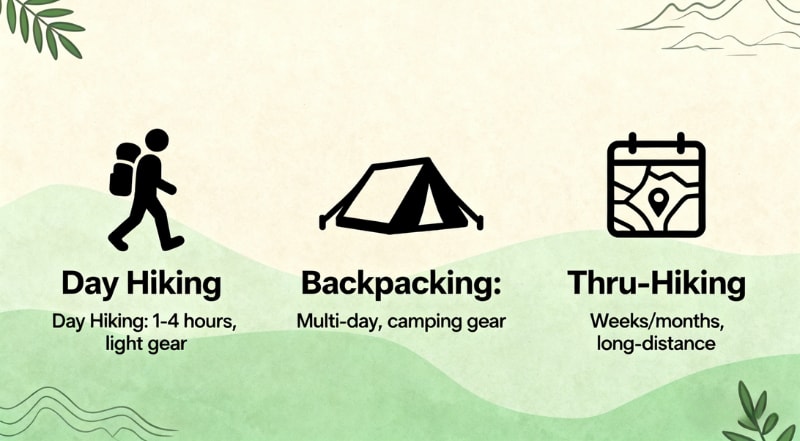
Hiking is just walking on a natural trail for pleasure. It's not about scaling mountains, carrying heavy packs, or camping in the wild.
Types of Hiking:
- Day Hiking (perfect for beginners): Same-day outing, light gear, usually 1–4 hours long.
- Backpacking: Multi-day hikes requiring camping gear.
- Thru-Hiking/Trekking: Long-distance hikes, like the Appalachian Trail, that take weeks or months.
We’ll focus on day hiking, the most beginner-friendly option.
Step 1: Hiking for Beginners – How to Assess Your Fitness Level
Hiking is for everyone, and you can start at your own pace. Knowing your fitness level helps you pick the right trails and avoid overexertion.
Simple Self-Check
-
Sedentary: If you're mostly inactive, start with short, flat trails.
-
Light Activity: For occasional walkers, go for moderate hikes with minimal elevation.
-
Active: If you exercise regularly, tackle longer or steeper trails.
Match Your Fitness to
-
Distance: Begin with short trails (1-3 miles) and increase as you build stamina.
-
Elevation Gain: Start with trails under 300 feet of elevation and gradually add more.
- Terrain: Stick to easy, well-maintained trails at first; more rugged terrain can come later.
Basic At-Home Prep
To prepare, try walking, using stairs, and doing leg/core exercises like squats, lunges, and planks to strengthen key muscles for hiking.
Starting small and progressing gradually will help you build confidence and enjoy your hikes!
Step 2: Where to Hike for Beginners?
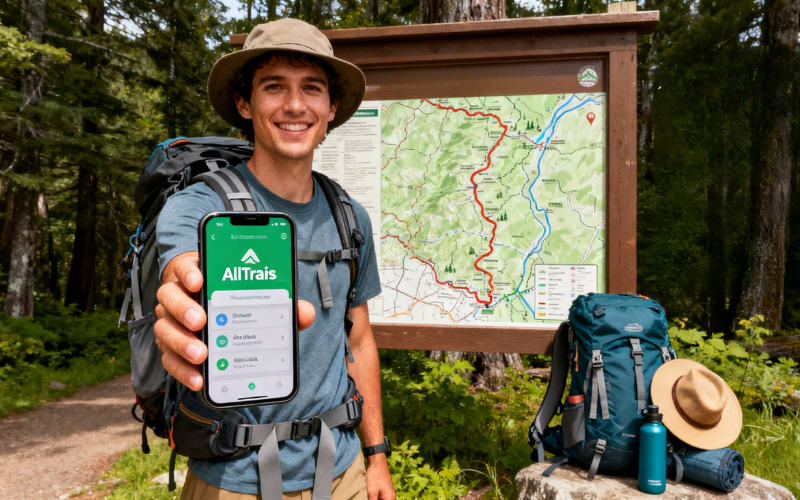
Choosing the right trail is key for a successful first hike. Here’s how to find a trail that fits your experience and fitness level.
Best Types of Trails for Beginner Hikers
-
Well-marked and well-maintained: Look for trails that are easy to follow with clear signage. These trails are usually in good condition and safer for beginners.
-
Close to town: Start with trails near your home or accommodations for convenience and ease.
-
Popular but not overcrowded: Choose trails that are well-known but not too busy, so you can enjoy the hike without feeling rushed.
-
Out-and-back or short loop: These types of trails are easier to follow. Aim for hikes that last 1.5–3 hours, including time for breaks.
Hiking Tips: How to Choose the Right Trail for Your First Hike
-
Read trail pages: Pay attention to the difficulty, distance (round-trip vs. one-way), elevation gain, and terrain. This will help you understand what you're getting into.
-
Use apps like AllTrails: These apps provide detailed trail descriptions, difficulty ratings, and recent reviews, helping you make an informed decision.
- Avoid "scrambling" routes: For your first hikes, steer clear of trails that require rock scrambling or using your hands for climbing. These can be too challenging and unsafe for beginners.
How Long Should a Hike Be for Beginners?
-
General rule of thumb by fitness:
-
True beginners: Stick to 2–3 km (1–2 miles), with minimal elevation gain.
-
Lightly active: If you exercise occasionally, aim for up to 5 km (3 miles) with some gentle hills.
-
Time estimate: Plan for a pace of 2–3 km/h, plus breaks and an extra buffer for unforeseen delays.
- Set a “turn-around time”: To avoid hiking in the dark, plan to turn back early enough to finish before sunset.
Step 3: How to Prepare for a Hiking Trip (Beginner Edition)
Proper preparation is crucial for a safe and enjoyable hiking experience. Follow these simple steps to ensure you’re ready for your adventure.
Check the Weather and the Best Time to Hike
-
Best time to hike: Aim to hike during cooler hours—early morning or late afternoon—depending on the season. These times offer more comfortable temperatures and fewer crowds.
-
Watch out for:
-
Heat waves: Hiking during a heat wave can be dangerous. Always check the temperature and bring extra water.
-
Storms: Be aware of the forecast, especially for thunderstorms that can arise quickly.
-
Early sunsets in fall/winter: Daylight is shorter, so plan your hike accordingly to avoid getting caught in the dark.
Study the Map Before You Go
-
Download or screenshot maps: Use apps like AllTrails or GaiaGPS to download offline maps so you can navigate without cell service.
-
Know key trail details: Familiarize yourself with the trailhead location, main junctions, the highest point, and the approximate time it will take to complete the hike.
Share Your Plan and Basic Safety Prep
-
Tell a friend: Always let someone know your hiking plans, including where you’ll be and when you plan to return. This ensures someone can check on you if necessary.
- Save park and emergency numbers: Have the contact information for the park and emergency services handy, just in case of an unexpected situation.
Step 4: What to Wear Hiking – What Is the 3 Layer Rule for Hiking?
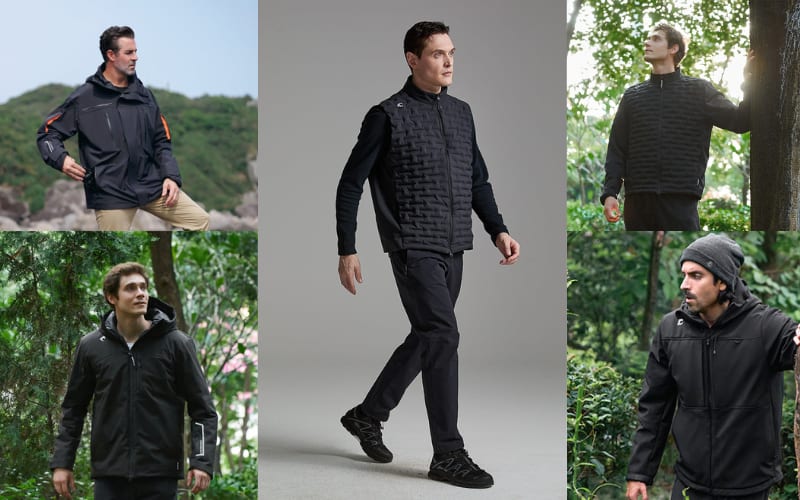
When transitioning from city streets to mountain trails, it's essential to dress in layers. Layering allows you to manage your body temperature and stay comfortable throughout your hike. Here's the 3-layer system to help:
What Is the 3 Layer Rule for Hiking?
-
Base layer: This layer is closest to your skin and is designed to wick moisture away. Avoid cotton, as it retains moisture and can make you cold when wet. Opt for moisture-wicking fabrics like merino wool, polyester, or nylon.
-
Mid layer: The insulation layer. This helps to keep you warm, especially when temperatures drop. Common mid-layers are fleece, light synthetic jackets, or down. Choose materials that balance warmth and breathability.
- Outer layer: The protective shell. This layer protects you from wind, rain, and snow. A windproof or waterproof shell jacket is ideal. Make sure it’s breathable to prevent overheating and let moisture escape.
Why this matters more in fall/winter:
During cooler months, temperature swings, sweat, and wind chill are common. The 3-layer rule allows you to add or remove layers based on your activity level and weather conditions. Sweat can cool your body rapidly, so layering helps you control your temperature.
Hiking Clothing Tips for Beginners (City-to-Trail Friendly)
As a beginner, you want hiking clothes that can transition smoothly from city streets to outdoor trails. Here’s what to keep in mind:
-
Long pants vs shorts: Long pants are great for protecting you from scrapes, insects, and sun exposure. However, for warm weather, breathable hiking shorts are a good choice. Make sure they're durable and provide some leg coverage.
-
Tech fabrics vs denim/cotton: Avoid cotton (including denim), as it holds moisture, leaving you uncomfortable. Instead, choose lightweight, moisture-wicking fabrics like polyester, merino wool, or other tech fabrics designed for outdoor activity.
- Accessories: Don't forget a hat, gloves, beanie, and neck gaiter—especially if you're hiking in cooler weather. These items protect you from the sun, wind, or cold. A hat helps with sun protection and keeps sweat out of your eyes.
The Alpargali Approach
Alpargali merges high-performance materials with stylish designs, offering outdoor gear that performs on the trail and looks great in the city. Here are a few of their standout pieces:
-
Alpargali Aerogel Graphene Puffer Jacket: This jacket blends NASA-inspired technology with advanced materials like graphene, aerogel, and Sorona®. It’s lightweight yet incredibly warm, making it perfect for year-round protection. Its Teflon™ waterproof shell and multi-layer insulation keep you comfortable from -40°C to +10°C, while reflecting style in both urban and outdoor settings.
-
Graphene Vest: Combining graphene heat-locking technology, Teflon™ waterproof fabric, and Sorona® insulation, this vest offers lightweight, breathable warmth. It’s perfect for layering in various climates, ideal for outdoor sports or as an inner layer for colder adventures.
-
Graphene Lightweight Jacket: A perfect balance of warmth and lightness, this jacket uses 100% graphene back panels for superior heat retention, Sorona® fabric for breathable warmth, and a Teflon™ outer layer for durability and water resistance. It’s a versatile jacket that’s stylish for the city and practical for outdoor use.
-
Alpargali Men’s All-Weather Outdoor Jacket: Designed for the modern adventurer, this jacket combines urban aesthetics with high-performance outdoor capabilities. With waterproof and breathable features, along with a range of practical pockets, it’s built for seamless transitions from city life to outdoor expeditions.
- Alpargali CoreShell Jacket: Redefining softshell jackets, this innovative piece uses Core Lock™ insulation for superior warmth and TPU membranes for weather resistance. Perfect for winter or chilly autumn days, it balances flexibility, style, and performance for both city and trail environments.
Footwear for Hiking for Beginners
Footwear is one of the most important aspects of your hiking gear. Here’s how to choose the right shoes:
-
When running shoes are enough: If you're doing a short hike on well-maintained, relatively flat trails, running shoes or trail runners will suffice. They're lightweight, breathable, and comfortable.
-
When to consider hiking shoes/boots: For more challenging terrain—like rocky paths, muddy trails, or snow—hiking shoes or boots offer better ankle support and traction. They help prevent injuries and give you extra stability on rough surfaces.
-
Fit, break-in, socks: Make sure your shoes fit properly and are broken in before your hike. Ill-fitting shoes can cause blisters and discomfort. Avoid cotton socks; instead, choose wool or synthetic socks to wick moisture away and reduce blister risk.
By following these tips, you'll be prepared for both city streets and mountain trails. Enjoy your hike in comfort and style, no matter where the adventure takes you!
Step 5: What Are the 10 Essentials When Hiking?
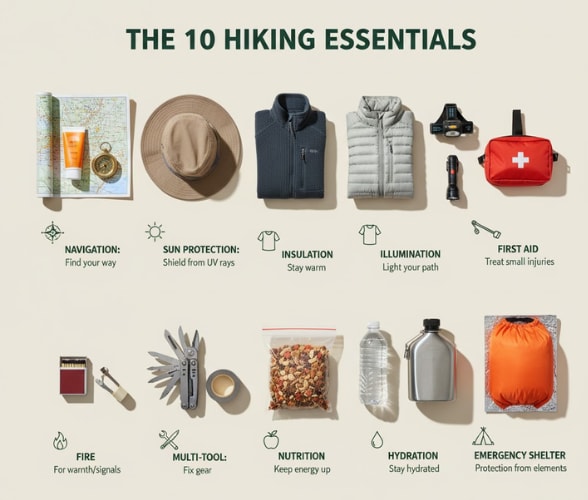
The 10 hiking Essentials are items you should bring on every hike to ensure your safety, comfort, and ability to handle unexpected situations. Here’s the simplified version of the list:
-
Navigation: A map, app, and/or compass to help you find your way and avoid getting lost.
-
Sun Protection: Hat, sunglasses, and sunscreen to protect yourself from the sun’s harmful rays.
-
Insulation: Extra layers to stay warm if the temperature drops unexpectedly.
-
Illumination: A headlamp or flashlight to light your way in case you finish the hike after dark.
-
First Aid Kit: A basic first aid kit for treating small cuts, bruises, or other injuries.
-
Fire: Matches or a lighter to start a fire if needed for warmth or emergency signaling.
-
Repair Kit & Multi-Tool: A small repair kit for fixing gear and a multi-tool for handling minor problems.
-
Nutrition: Extra snacks to keep your energy up on the trail.
-
Hydration: Extra water to stay hydrated, especially in hot or dry conditions.
- Emergency Shelter: Bivy sack, space blanket, or an emergency poncho to protect you from the elements in case of an emergency.
These 10 items are your basic building blocks for a safe and prepared hike, regardless of your experience level.
Step 6: How Much Water to Bring on a Hike?
Rules of Thumb for Day Hiking
-
~0.5 liter per hour of moderate hiking in mild weather:
- In mild weather (cooler temperatures, not too hot or humid), you should aim to drink about 0.5 liters of water for every hour of hiking at a moderate pace. This is a general guideline to keep you hydrated without overpacking.
-
Adjust for heat, altitude, personal sweat rate:
-
Hot weather: If you're hiking in hot conditions or direct sunlight, increase your water intake. You may need 1 liter per hour or more.
-
Higher altitudes: At higher elevations, the air is drier and you’ll sweat more, so drink more than usual.
-
Sweat rate: Everyone's body is different. If you tend to sweat a lot, you may need more water to stay hydrated.
Signs of Dehydration to Watch For
-
Dry mouth or feeling thirsty.
-
Fatigue or feeling unusually tired.
-
Dizziness or lightheadedness.
-
Dark yellow urine (indicating concentrated urine).
If you notice any of these symptoms, take a break and drink water immediately. Dehydration can affect your energy levels and decision-making on the trail, so it’s essential to stay ahead of it.
Options: Bottles vs Hydration Bladder
-
Water Bottles:
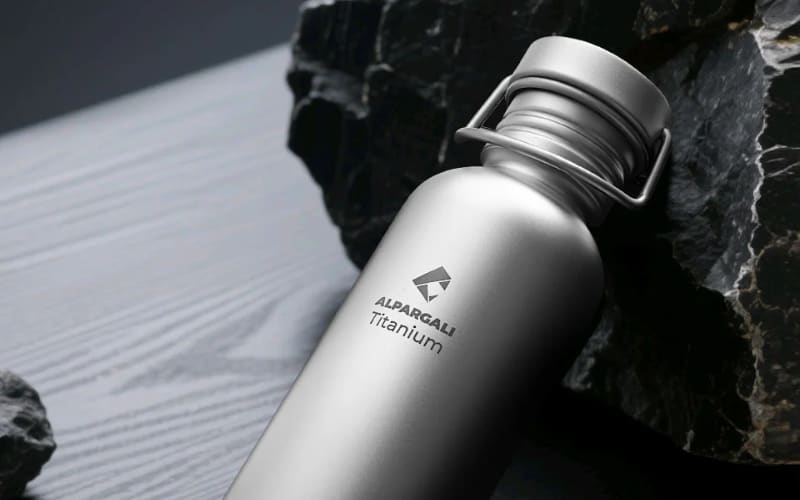
- Easy to carry and refill. Reusable water bottles are great for day hikes and allow you to keep track of how much you've drunk.
-
Hydration Bladders:
- A hydration bladder is a convenient option if you prefer sipping water while on the move. It sits inside your backpack and connects to a tube for hands-free hydration, but make sure it’s properly cleaned to avoid any bacteria build-up.
Both options work well, so choose what feels most comfortable for your hike.
Step 7: On-Trail Hiking Tips – How to Hike Without Suffering
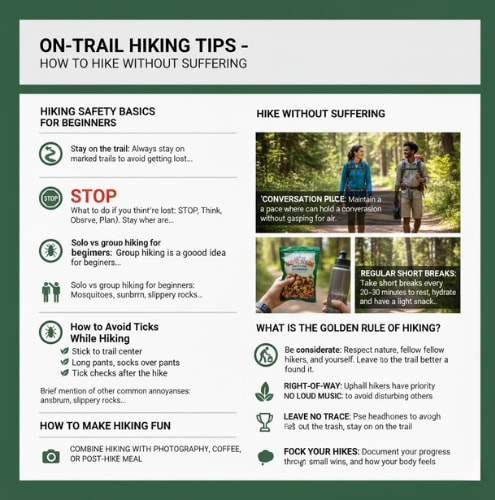
“Conversation pace” rule: Maintain a pace where you can hold a conversation without gasping for air. This is a good sign you’re not overexerting yourself and can maintain energy throughout the hike.
Regular short breaks, snacks: Take short breaks every 20–30 minutes to rest, hydrate, and have a light snack (such as trail mix or fruit). This helps avoid fatigue and keeps your energy levels up.
When to turn around: If you start to feel exhausted, the weather takes a turn for the worse, or something just feels off, don’t hesitate to turn back. Trust your gut feeling and remember that hiking is about enjoyment, not pushing your limits too far.
Hiking Safety Basics for Beginners
-
Stay on the trail:
- Always stay on marked trails to avoid getting lost, damaging the environment, or encountering hidden dangers like wildlife.
- What to do if you think you’re lost: STOP
- If you realize you're lost, STOP (Stop, Think, Observe, Plan). Stay where you are to avoid wandering further. Use your map or GPS to assess where you are and retrace your steps back to the last known point.
-
Solo vs group hiking for beginners:
- While solo hiking is perfectly safe for some, group hiking is a good idea for beginners, especially if you're new to the trail or concerned about safety. It provides support and ensures there’s someone there in case of an emergency.
How to Avoid Ticks While Hiking (and Other Small Risks)
-
Stick to the trail center where possible: Try to stay in the center of the trail to avoid brushing against tall grasses or bushes where ticks and other insects may be hiding.
-
Long pants, socks over pants in high tick areas: In areas known for ticks, wear long pants and tuck your pants into your socks to minimize exposure. This creates a barrier and makes it harder for ticks to latch onto your skin.
-
Tick checks after the hike: After your hike, do a tick check on yourself, especially in areas like your legs, armpits, and neck. Ticks can be hard to spot, so a thorough inspection is essential.
- Brief mention of other common annoyances: Mosquitoes, sunburn, and slippery rocks are other common issues. Bring bug spray for mosquitoes, sunscreen for protection, and be cautious of slippery surfaces, especially after rain. Take it slow when crossing wet or rocky terrain to avoid falls.
By keeping these tips in mind, you’ll be able to enjoy your hike without unnecessary discomfort, ensuring that your experience is both safe and fun!
What Is the Golden Rule of Hiking? (Trail Etiquette 101)
The golden rule of hiking is to be considerate: Respect nature, fellow hikers, and yourself. Leave the trail better than you found it and ensure everyone enjoys their time on the trail.
Basic Trail Etiquette for Hiking for Beginners
Right-of-way: Uphill hikers have priority. Also, be mindful of horses and bikes on certain trails.
No loud music: Keep music at a low volume or use headphones to avoid disturbing others. Many hikers seek peace and connection with nature.
Leave no trace: Always pack out your trash, stay on the trail, and refrain from picking flowers. Respect nature to help preserve it for future hikers.
How to Make Hiking Fun (So You Actually Want to Go Again)
- Focus on the journey: Instead of focusing on pace or “conquering” peaks, enjoy the views, small wins, and how your body feels. Appreciate the experience, not just the destination.
- Go with a friend or small group: Hiking with others can make the experience more enjoyable, sharing the trail and encouraging each other.
- Combine hiking with photography, coffee, or a post-hike meal: Bring a camera, take breaks for coffee, or enjoy a meal after your hike to make the experience more memorable.
- Track your hikes: Document your progress through apps, notes, or photos. It helps keep you motivated and gives you something to look back on with pride.
With this hiking guide, you're now equipped to enjoy the outdoors with confidence. Whether you're new to hiking or looking to improve your experience, having the right gear makes all the difference. From smart layering to choosing the right footwear, preparation is key for a safe and enjoyable hike.
Why settle for less? Alpargali offers high-performance outdoor gear designed for both style and function. Our Aerogel Graphene Puffer Jacket, Graphene Vest, and All-Weather Outdoor Jacket ensure you stay comfortable and protected on any trail.
Don’t wait—shop Alpargali now and gear up for your next adventure. Happy hiking!
FAQ: Hiking Tips for Nervous First-Timers
Is hiking safe for beginners?
Yes, hiking is safe for beginners if you stick to easy trails, stay on marked paths, and go at your own pace. Always bring the right gear and let someone know your plans.
How to start hiking if I’ve never hiked before?
Start with short, easy trails close to home. Gradually increase distance and difficulty as you gain experience.
Do I need special gear or can I hike in normal clothes?
For easy hikes, comfortable sneakers and breathable clothes are fine. For tougher trails, consider Alpargali’s weather-resistant layers and hiking shoes for added comfort and protection.
What is scrambling hiking and should beginners try it?
Scrambling involves climbing over rocks and tough terrain, not recommended for beginners. Stick to easy trails until you gain more experience.
How to prepare for a hiking trip if I live in the city?
Look for local trails using apps like AllTrails. Train by walking or using stairs. Check the weather and plan your hike accordingly.


